

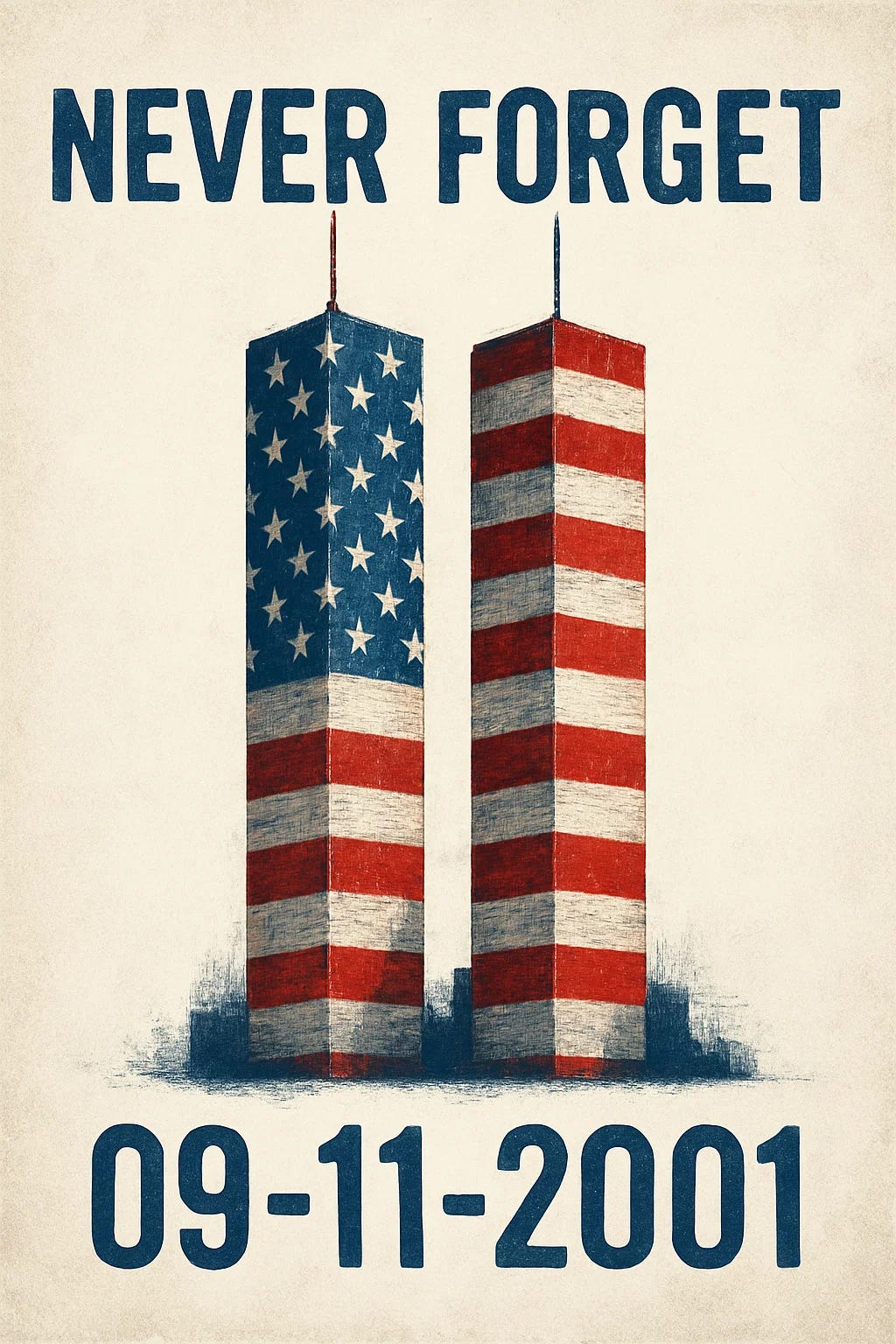
Twenty-four years ago today, the world watched in horror as the unthinkable unfolded across America's skies. On that crystal-clear Tuesday morning, 19 terrorists hijacked four commercial airplanes, transforming them into weapons that would forever alter the course of history.
At 8:46 AM, American Airlines Flight 11 crashed into the North Tower of the World Trade Center. As smoke billowed from the Manhattan skyline and confusion gripped the nation, a second plane—United Airlines Flight 175—struck the South Tower at 9:03 AM. The deliberate nature of the attacks became undeniable. America was under assault.
The Pentagon, the heart of America's military command, was struck at 9:37 AM by American Airlines Flight 77. Meanwhile, passengers aboard United Airlines Flight 93, learning of the other attacks through phone calls, mounted a heroic resistance against their hijackers. Their plane crashed in a Pennsylvania field at 10:03 AM, their sacrifice preventing an attack on what investigators believe was the U.S. Capitol or White House.
By 10:28 AM, both towers of the World Trade Center had collapsed, sending massive clouds of dust and debris through Lower Manhattan's streets. The iconic skyline was forever changed, and with it, America's sense of invulnerability.
The Human Cost
The numbers tell only part of the story: 2,977 innocent lives lost that day—office workers starting their morning, first responders rushing toward danger, passengers and crew members on the hijacked flights. Citizens from over 90 countries perished, making this not just an American tragedy, but a global one.
Behind each number was a person with dreams, families, and futures cut short. The youngest victim was just two years old; the oldest, 85. Among the dead were 343 firefighters and 72 law enforcement officers who ran into burning buildings while others fled, embodying the very best of humanity in the face of the worst.
A World Transformed
The ripple effects of that September morning reshaped global politics, security, and daily life in ways still felt today. Air travel changed forever with enhanced security measures. The Department of Homeland Security was created. America launched the War on Terror, beginning with Afghanistan and later Iraq, conflicts that would span decades and cost thousands more lives.
The attacks sparked debates about freedom versus security, religious tolerance, and America's role in the world. They influenced elections, legislation, and foreign policy for a generation. The USA PATRIOT Act expanded government surveillance powers, while the reconstruction of Ground Zero became a symbol of resilience and renewal.
The Spirit of Unity
Yet from the ashes emerged something powerful: unity. Americans lined up to donate blood. Volunteers streamed to New York from across the country. Communities held candlelight vigils. The phrase "Never Forget" became both a promise to honor the victims and a vow to remain vigilant.
Stories of heroism emerged—from the Pentagon employees who pulled colleagues from burning offices, to the boat captains who evacuated half a million people from Manhattan in the largest maritime evacuation in history, to the Newfoundlanders who welcomed thousands of stranded airline passengers when U.S. airspace closed.
Remembering Today
Now, 24 years later, we face the challenge of keeping memory alive for a generation born after the attacks. The 9/11 Memorial and Museum stands where the Twin Towers once rose, with twin reflecting pools marking their footprints and bronze panels bearing every victim's name. The Freedom Tower stretches 1,776 feet into the sky—a deliberate reference to the year of American independence.
Each anniversary, families gather to read the names aloud, a ritual that takes hours but ensures each person is remembered individually, not just as a statistic. The bells toll at the precise moments the planes hit and the towers fell, marking time that stopped for so many.
The Ongoing Legacy
The effects continue to unfold. Thousands of first responders and survivors battle illnesses linked to toxic exposure at Ground Zero. Children who lost parents that day are now adults, many choosing careers in public service to honor their loved ones' memories. The 9/11 Victim Compensation Fund continues to provide support to those affected.
September 11, 2001, remains a defining moment—a day when ordinary people faced extraordinary horror with remarkable courage. It reminds us that while hatred can destroy, the human spirit to rebuild, to help one another, and to hope is far stronger. As we mark this anniversary, we honor not just how they died, but how they lived, and we reaffirm our commitment to the values they died defending: freedom, diversity, and the fundamental dignity of every human life.
In remembering September 11th, we acknowledge both our vulnerability and our strength, our capacity for both grief and resilience. We remember not to remain mired in sorrow, but to ensure that those we lost did not die in vain—that from the darkness of that day, we continue to forge a more united, compassionate, and peaceful world.